
Materials
Woods and finishes for bespoke joinery
There is no universally better wood, nor a finish that suits every project. We choose each combination according to the use, location, exposure, maintenance, budget and the result the client is after.
Wood swatch library
Tones, grain and finish references
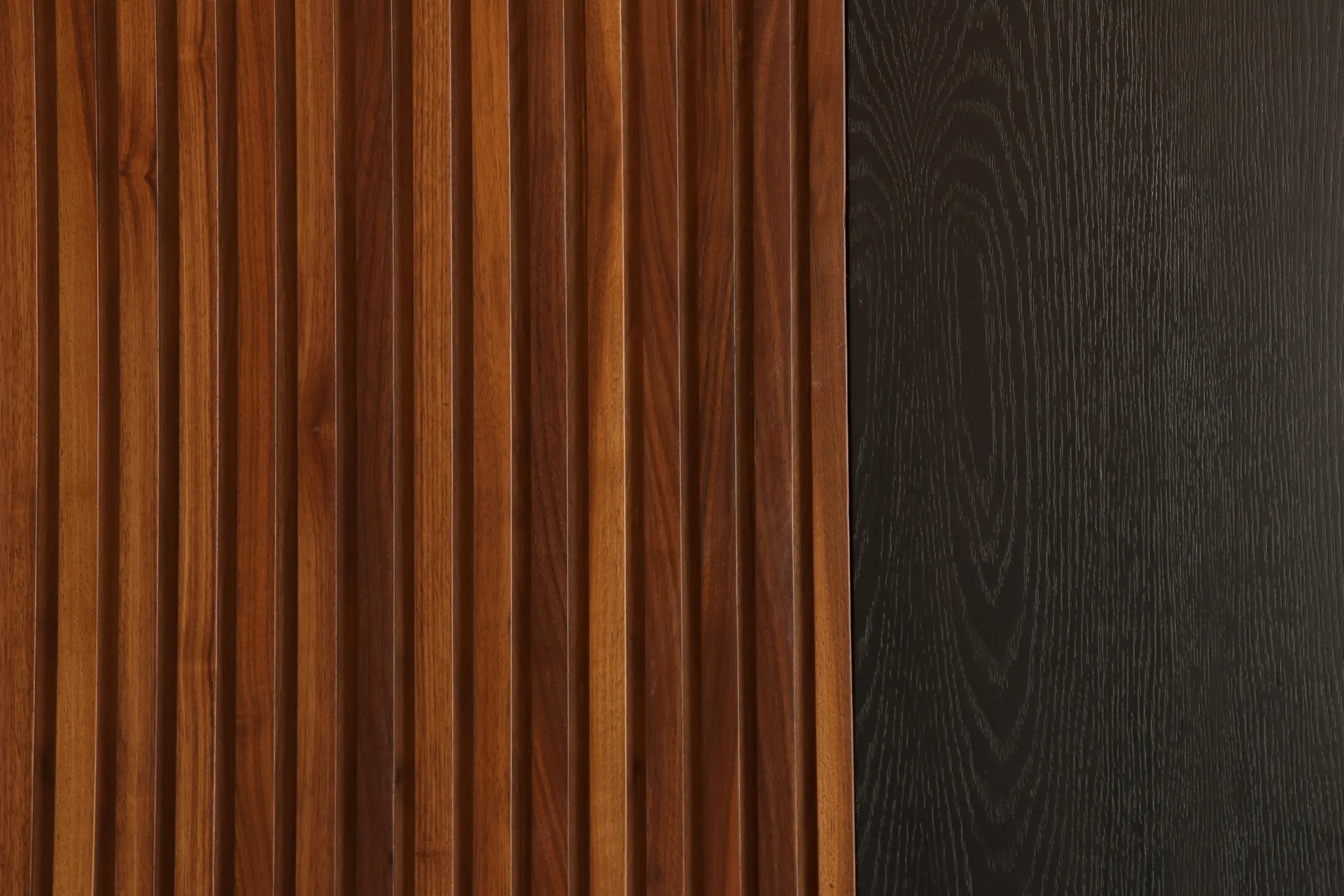
Natural wood changes from one species to another, and also between boards of the same species. This library lets you explore tone, grain and appearance references; the final selection for each project is made later on physical samples.
A representative sample set sorted by tone. Tap any wood to view it larger. Availability of species and finishes upon request.
Woods we work with
Solid wood, plywood and glued panels
We work mainly with solid wood and with plywood or glued-panel solutions made from different species. We do not use MDF, melamine, laminate or WPC. Construction is defined by the type of piece, strength, finish and the conditions of each project.
Tzalam
One of the species we use both indoors and in outdoor solutions, depending on design, finish and exposure conditions.
Parota
A species present in interior projects and also considered outdoors when conditions and maintenance are right.
Walnut
One of the species available for interior furniture and pieces where its tone and grain are part of the design.
Oak
Used in interior furniture when its appearance and characteristics suit the design and use of the project.
Rosewood
A species we can use in furniture and carpentry according to the design and needs of each project.
Cedar
One of the species available for different interior carpentry elements, according to the project.
Cumaru
One of the woods we consider for exteriors, entrance doors, decking and exposed elements, with the right treatment and maintenance.
Poplar
We regularly use it for frames and structures that can later receive plywood or cladding in the chosen species.
Available finishes
The finish is approved on a sample, before any material is bought
We start from a client reference or from our own samples. We prepare tests on the same wood species the project will use and adjust tone, sheen, intensity and the appearance of the grain. The chosen sample is signed off and approved before the finish is applied to the project.
Polyurethane varnish
Durability for kitchens, bathrooms and frequently used surfaces.
Oils
A natural touch that respects the grain; renewed with periodic maintenance.
Stains & solid colours
From a uniform solid colour to tones that maximise the grain.
Moisture & pest protection
Treatment for pieces exposed to weather, humidity or coastal conditions.
Matte, semi-matte or satin
Sheen level and open or closed pore, depending on the texture the project calls for.


Indoors and outdoors
Indoors there is a wider range of species and finishes, since exposure to sun, water and changing conditions is lower. Outdoors, material, construction, protection and maintenance have to be assessed together.
Coastal projects
Humidity, salinity, ventilation and environmental exposure change the choice of wood, finish, hardware and maintenance. That is why a coastal project calls for different decisions than one set inland.
Natural variation
Every piece of wood can show differences in tone, grain and texture. A sample works as a reference, but it cannot reproduce exactly every board that will form part of a project.
Keep exploring
Other sections you may find useful
Material questions
Questions about woods, finishes and maintenance
What's worth knowing before choosing a species by its colour alone.
There is no universally best wood. The choice depends on how the furniture will be used, where it sits, its exposure, maintenance, budget, the finish you want and even whether the home is your own, a rental or built for sale.
Colour can be a starting point, but strength, durability, maintenance, budget and conditions of use must also be considered. Our job is to help balance appearance with the behaviour each piece needs.
Indoors we can work with different species depending on the design and the project's needs, among them tzalam, parota, oak, walnut and other woods we handle. For frames and structures we usually use poplar, which can then take plywood or a facing in the chosen species.
Outdoors we mainly consider harder, more resistant woods such as tzalam, parota and cumaru. Even so, durability does not depend on the species alone: design, treatment, installation, protection and maintenance all play a part.
On the coast we have to account for humidity, salinity, ventilation, environmental exposure, frequency of use and maintenance. These conditions can change the choice of wood, finishes, hardware and some construction details of the furniture.
We work mainly with solid wood and with plywood or glued-panel solutions made from different wood species, according to each project's construction needs.
No. We do not use MDF, melamine, laminate or WPC. We work with materials and systems that meet the strength, appearance and durability criteria we set for our projects.
We work with polyurethane varnishes, oils, stains, solid colours and protective products, along with different sheen levels such as matte, semi-matte and satin. We can also work open- or closed-pore finishes depending on the result you want.
We start from a sample, photograph or reference from the client and prepare tests on the same wood species that will be used. Alternatives are compared and adjusted until a final sample is chosen and approved before being applied to the project.
Once the finish is approved and the process is under way, a change can mean rework, additional costs and a shift in the delivery date. That is why we run the necessary tests and adjustments before the final sample is approved.
Because natural wood varies in tone, grain and texture from board to board. A sample works as a reference for species, colour and finish, but it cannot represent exactly every board that will form part of the project.
Yes, especially when it is exposed outdoors. Maintenance keeps the finish's protection intact and avoids unnecessary exposure to moisture, sun, dirt or aggressive products. How often depends on the material, finish, location and conditions of use.
Which wood suits your project?
We advise with physical samples and adjust tone, sheen and pore until the finish is right.